Segovia
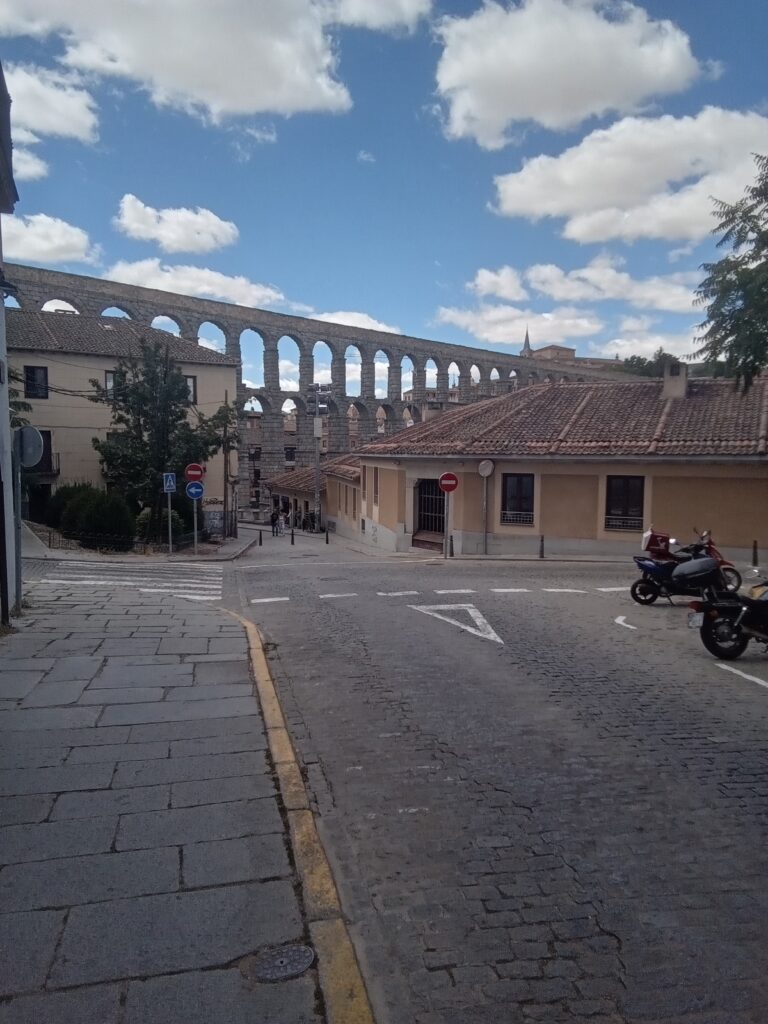
Segovia is a city in Castile, about 60 kilometres northwest of Madrid. The old city stands on a rocky outcrop at the foot of the Sierra de Guadarrama, where the rivers Eresma and Clamores meet. The upper part of the site is completely enclosed by walls and contains numerous Roman and medieval monuments. One of the best‑known examples is the Roman aqueduct dating from the first century. It is 28 metres high and runs through part of the city centre. The structure consists of 160 arches, partly arranged on two levels, and was built using 24,000 granite blocks. The aqueduct is 728 metres long and formed part of the 16‑kilometre water conduit between Riofrío and Segovia.
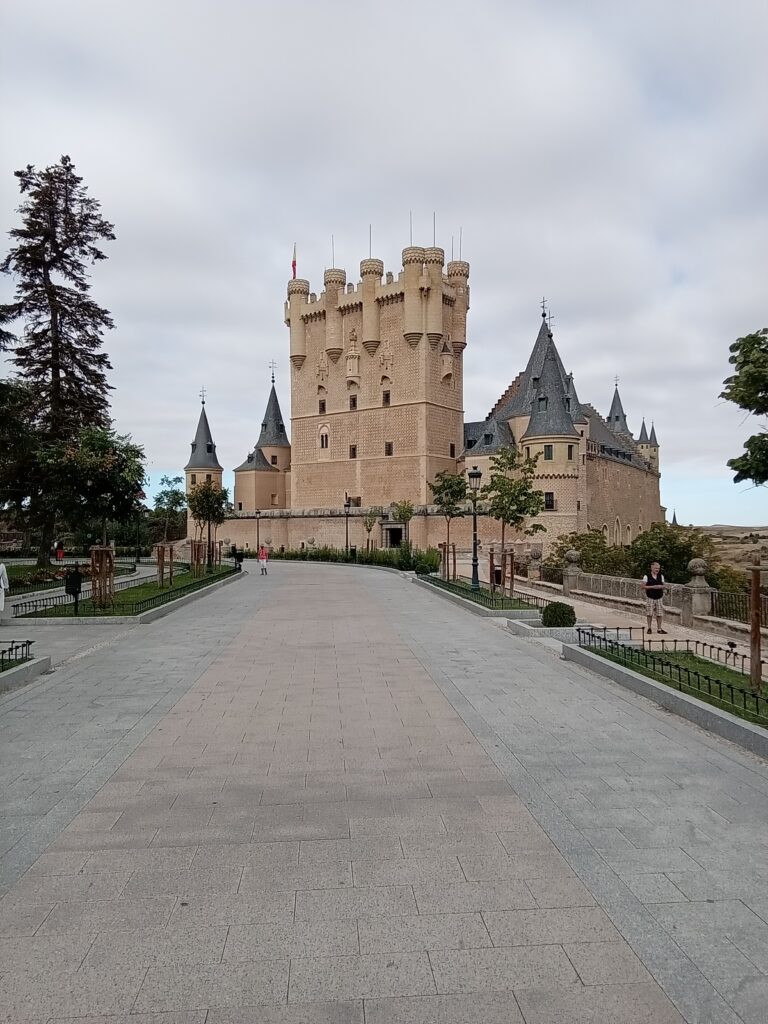
In 1461, Isabel and her brother Alfonso were called to court by their half-brother, King Enrique IV. The court was situated in the Alcázar of Segovia. The reason for this move to Segovia was that Juana, Enrique’s wife, was pregnant. Isabel and Alfonso were placed under the supervision of Enrique IV in order to maintain control over the succession and limit the influence of the nobility.
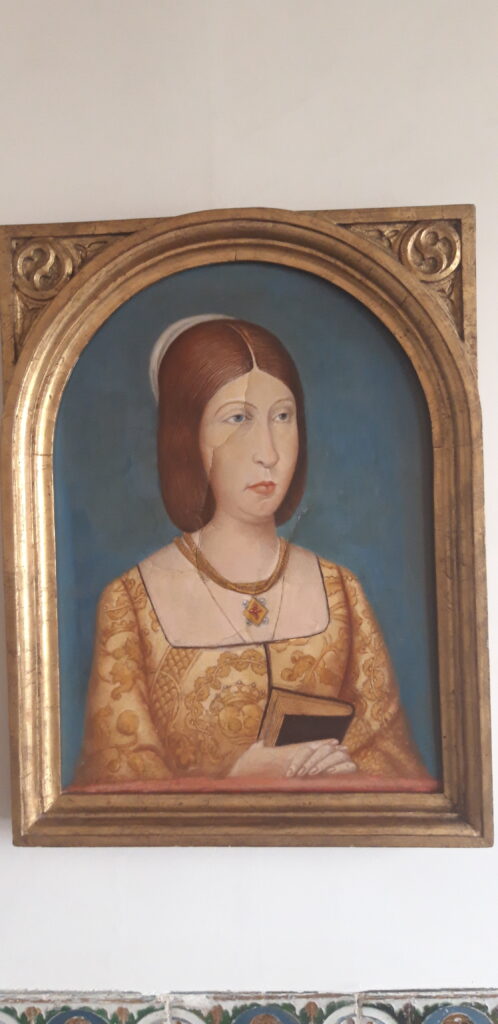
In the portrait hanging in the Alcázar, Isabel is shown with red hair, a trait inherited from her maternal great-grandmother, Felipa de Lancaster, who was of English descent. Although Isabel is often depicted with blond hair tinged with red in other portraits, she is portrayed in this painting with distinctly red hair.
On 15 January 1475, the so-called Concordia de Segovia was signed by Isabel and Fernando, establishing the union of the kingdoms of Aragon and Castile and laying the foundations for the Spain we know today. The Concordia defined the respective roles of Isabel and Fernando: Isabel, as the rightful heir and ruler in her own right, held sovereignty over the kingdom, while Fernando was granted the title of king and shared in its government.
It was also stipulated that Fernando could rule only during Isabel’s lifetime.